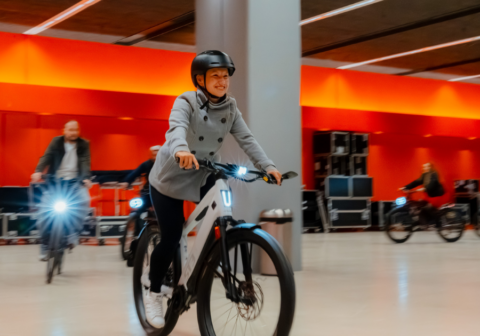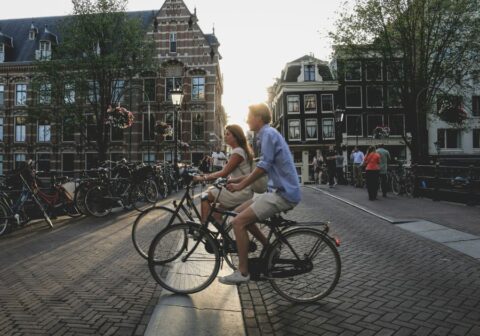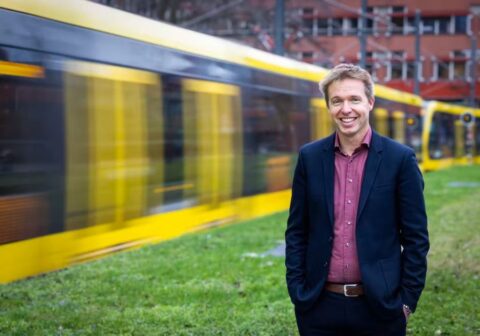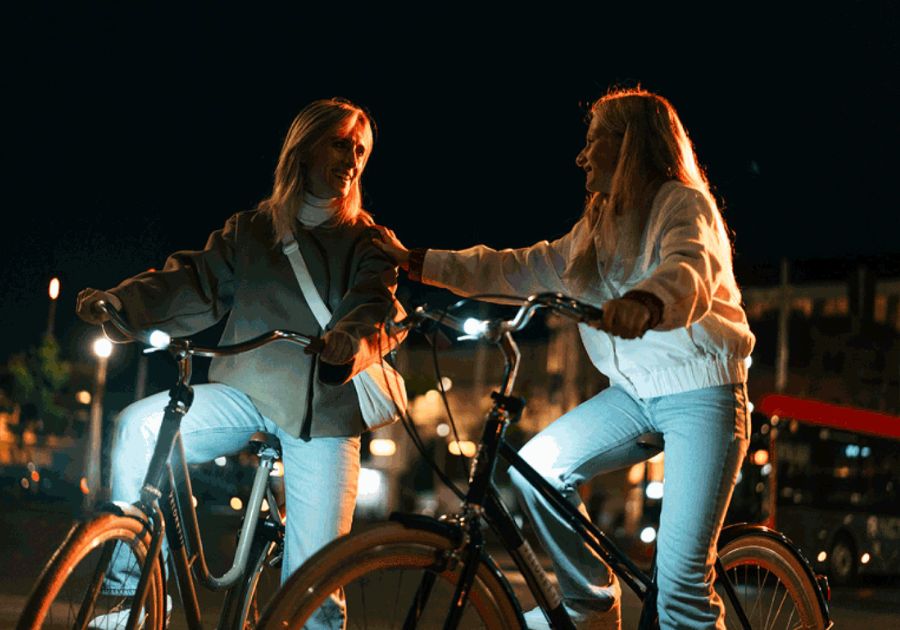
71 percent of bicycle accidents occur from the side. That figure stuck with Luci Santema (28) during her studies at Delft University of Technology, and became the starting point for Ziemi: a smart bike light that doesn’t shine forward or backward, but illuminates the cyclist’s legs. Anyone cycling next to you, pulling up behind you, or crossing the street from a side street will see you immediately. “It had to be simple and work instantly, as if you were standing in the spotlight yourself.”
A small detail with a big impact
For over a century, bicycle lights have been solving the same problem: ensuring you’re seen in the dark. But most lights shine straight ahead or backward—precisely the directions in which a cyclist is already relatively visible. Ziemi’s insight is that the risk comes mainly from the side—at intersections, during passing maneuvers, and from turning traffic. By directing light toward the legs, a cyclist remains recognizable from that angle as well, even while moving, which the eye picks up more quickly than a stationary light.
What it means for people on the street
The impact is palpable for the people who use it every day. An 80-year-old woman emailed Luci to say she finally felt safe in traffic again. Within four months of the initial release, 45,000 lights had been sold and the inventory was depleted—a sign that the demand for practical, well-designed safety features exceeds the supply. There are now more than 100,000 lights in stock, and the goal is ambitious: to make Ziemi the European standard for bicycle lighting.
Resourcefulness as the Key to a Safer Cycling Environment
Ziemi’s story perfectly illustrates what we’re looking for at Dutch Cycling Week: practical, well-thought-out solutions that address a real and underestimated risk. Not with expensive infrastructure, but with an idea that stems from a close examination of how bicycle accidents actually happen. It is precisely this kind of ingenuity—based on the cyclist’s perspective—that deserves a spotlight during Dutch Cycling Week.