Roadwork is causing major traffic disruptions this summer. At the Bike Totaal bike shop in Krimpen aan den IJssel, however, sales are booming. Will a forced detour get people to stick with cycling?
This summer, things are about to get busy on Dutch roads. Rijkswaterstaat is undertaking major maintenance on bridges and roads that often date back to the 1950s and 1960s: the A12 between Lunetten and Veenendaal, the A27 between Everdingen and Gorinchem, the A1 toward Amsterdam, the A20 between Kleinpolderplein and Terbregseplein, the Wijkertunnel, and the A32. The Papendrecht Bridge will even be closed to road traffic until April 2027. Rijkswaterstaat is warning drivers on several routes to expect additional travel time, which could be as long as one hour.
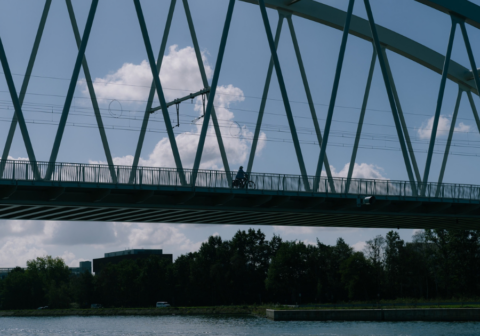
One of the most noticeable closures is that of the Algerabrug, the bridge connecting Krimpen aan den IJssel and Capelle aan den IJssel. Starting August 10, the bridge will be closed to cars, trucks, and buses for four weeks so that wooden and steel parts of the bascule bridge can be replaced and new asphalt can be laid. Normally, about 47,000 vehicles cross the bridge daily. For cyclists, pedestrians, and scooter riders, little will change: they can continue to cross via a specially constructed temporary bicycle bridge.
Not everyone is upset about the closure. While drivers are bracing themselves for long detours via Gouda, bike shop owner Christian Verhoeven of Bike Totaal in Krimpen aan den IJssel is seeing his business boom. On the Rijnmond radio show “Peter & Milou,” he explained that he’s prepared for the rush by stocking up on a substantial number of extra bikes (between 150 and 200 on top of his regular inventory), even though it sometimes feels uncomfortable to profit from something that is actually causing trouble for other business owners and drivers (source: Rijnmond).
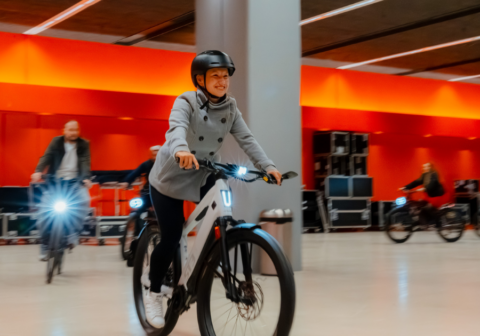
Verhoeven is familiar with the pattern from previous bridge closures: they consistently led to a noticeable surge in bicycle sales. What’s striking is which type of bike dominates during these periods. While e-bikes normally account for about three-quarters of his sales, that figure rises to nearly 100 percent around the time of the closure. He hardly sells any traditional bikes without electric assistance anymore.
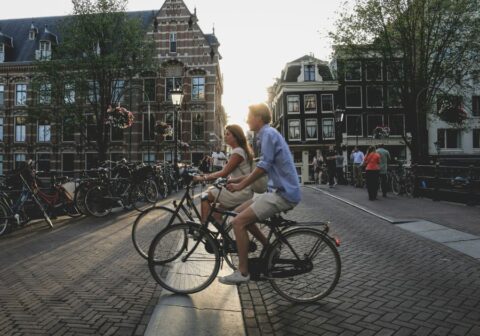
The explanation is obvious: for those who normally drive to Rotterdam or farther, an e-bike is suddenly an attractive alternative—comfortable enough to get you to work dry and refreshed.
This raises a question that goes beyond this one bridge and touches on the very heart of what Dutch Cycling Week is all about: once the Algerabrug reopens in a few weeks, will these new e-bikers get back in their cars, or will they keep cycling? There aren’t any hard numbers yet on whether this behavioral change will last. It’s an assumption, not a proven fact. But the logic isn’t far-fetched: once people experience that an e-bike can be just as fast, comfortable, and cheaper as a car, they have little reason to automatically switch back to driving once the construction is complete. Rijkswaterstaat is also using road closures like this to further promote cycling, which could amplify the effect.
For Utrecht—both the province and the city—which are positioning themselves as a model for cycling in the Netherlands during Dutch Cycling Week, this is a relevant consideration. A week full of roadwork is annoying for anyone stuck in traffic, but it can also be an unintended nudge toward a habit that benefits both people and the environment. Whether that nudge actually sticks remains to be seen once the bridges reopen.